
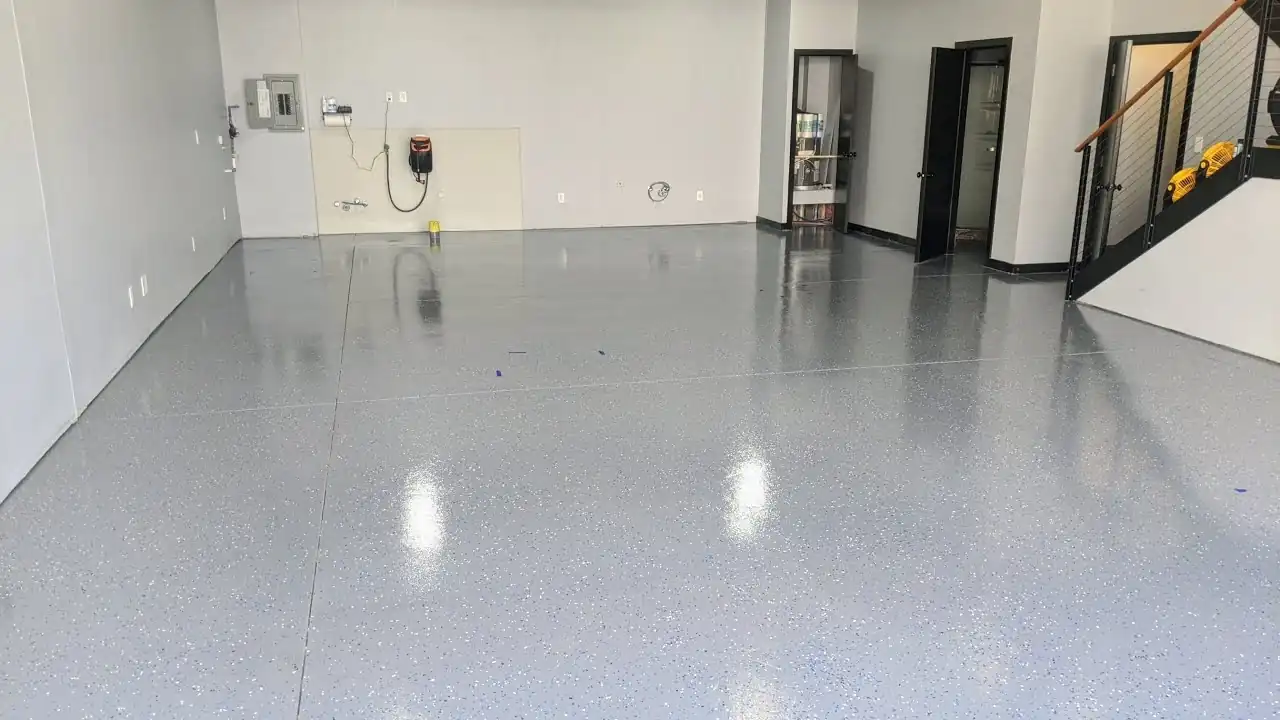
Ever walk into your garage and think, man, this floor has seen better days? Oil stains, cracks, that chalky dust that never seems to go away. A lot of homeowners hit that point and start Googling upgrades, usually stumbling onto epoxy or polyurea garage floor options.
And then—bam—you run straight into the big question: polyurea garage floor coating cost. Because, let’s be honest, this isn’t a $50 paint can kind of project. It’s an investment.
Here’s the thing though: garage floors take a beating. Between hot tires, dripping chemicals, maybe even the occasional dropped wrench, you need something tougher than just paint. That’s where polyurea coatings come in.
They’re not just durable, they’re long-lasting, UV resistant, and way faster to cure than epoxy. But that durability and quick turnaround? Yeah, they come with a price tag.
Now, the cost isn’t just about what you pay today. It’s about what you don’t pay tomorrow. A good polyurea coating can last decades with minimal upkeep, which means fewer re-coats, less repair, and less hassle. If you’ve ever had epoxy chip or yellow after just a few years, you’ll get why people are willing to pay more upfront.
In this guide, we’re going to dig into everything from average Polyurea Garage Floor Coating Cost to the little details nobody warns you about—like surface prep or regional pricing quirks.
We’ll look at polyurea vs epoxy, real-world numbers for different garage sizes, even the DIY vs professional debate. Think of it as your roadmap to making a smart garage renovation choice without feeling ripped off.
So, why is polyurea so popular? Simple: strength, speed, and looks. The trick is understanding how those factors tie into cost, performance, and long-term value. Let’s break it down.
What Is Polyurea Garage Floor Coating?
The Basics Explained
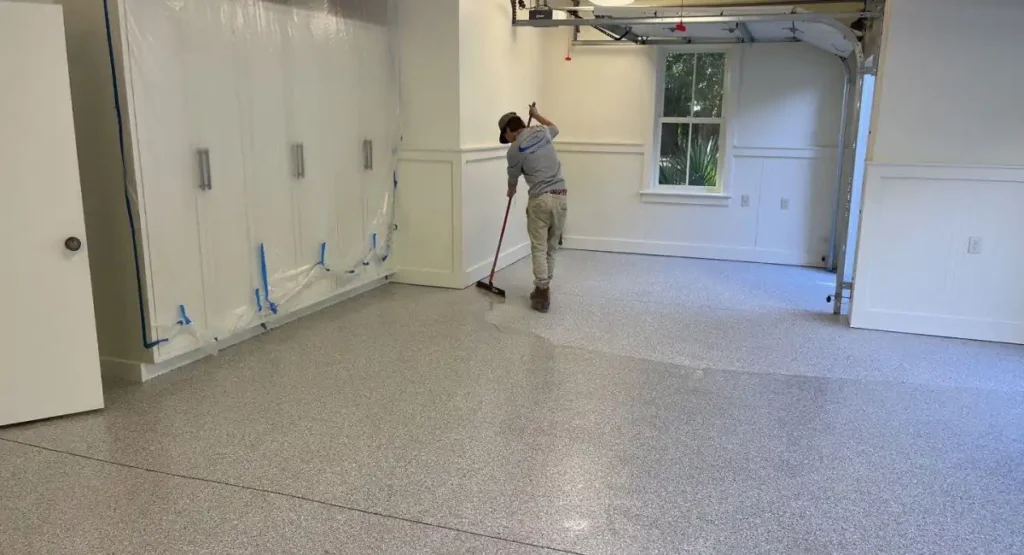
Polyurea sounds fancy, but it’s basically a type of elastomer—a high-tech coating that bonds incredibly well to concrete surfaces. Unlike basic garage floor paints or even some epoxy coatings, polyurea is flexible, resistant to cracks, and cures lightning fast. We’re talking hours instead of days. That means less downtime, which honestly is a huge perk if you hate waiting.
Compared to epoxy, polyurea offers superior UV stability (so it won’t turn yellow in sunlight), better chemical resistance, and greater elasticity. Epoxy’s been around longer and it’s cheaper, sure, but polyurea is often considered the “next-gen” solution in concrete coatings.
Some installers even mix in polyaspartic coatings, which are a type of polyurea but designed with extended working time—making the installation process a little less rushed.
Key Benefits Beyond Cost
- Durability: Handles high-traffic floors, impact, and even automotive shops.
- UV Resistance: Won’t fade or yellow like epoxy alternatives.
- Chemical Resistance: Gas, oil, salt, you name it.
- Quick Curing Time: Drive your car back in after just 24 hours.
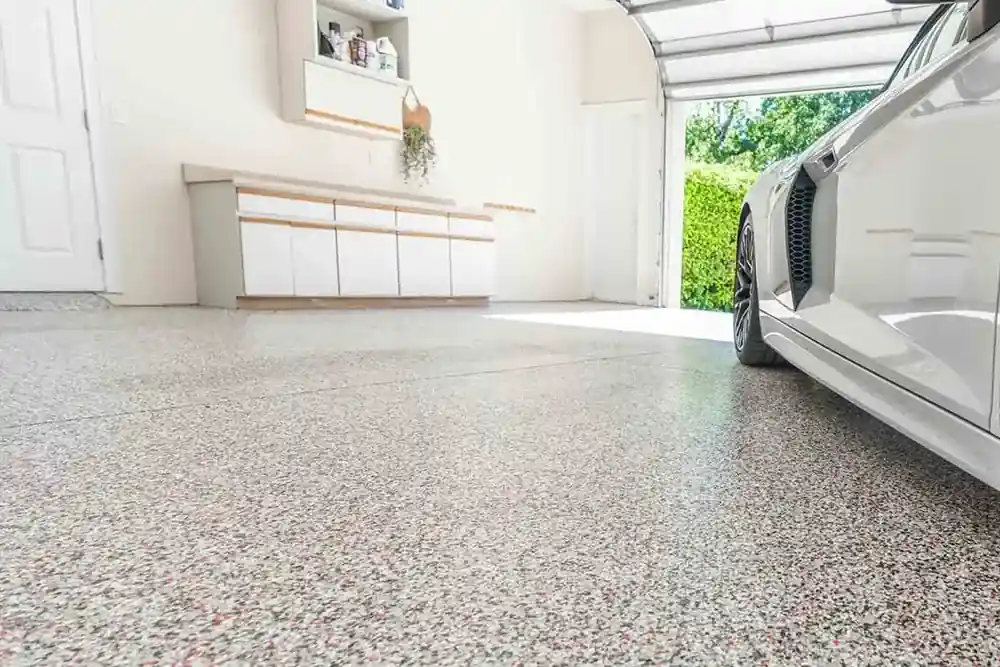
Another often-overlooked perk? A seamless floor finish. Add in vinyl chips or custom color blends like Torginol Color Flake, and suddenly your garage looks more like a showroom than a storage space.
Why Homeowners Prefer It
Here’s the truth: polyurea isn’t cheap. But for many, the payoff is in the low maintenance. You don’t have to re-coat every 5 years. You don’t scrub stains that never come out. You don’t worry about UV rays bleaching out your garage floor. The long lifespan alone makes it worth considering, especially if you see your garage as more than just a parking spot.
Is polyurea worth the investment? If you value durability, aesthetics, and long-term savings, most homeowners would say yes.
Polyurea Garage Floor Coating Cost – The 7 Unmissable Facts
Fact 1 – Average Price Range
So, let’s start with the big one—money. The polyurea garage floor coating cost per square foot typically runs between $4 and $12 nationwide. Sounds like a wide gap, right? That’s because so much depends on your location, surface prep, and whether you’re getting a standard finish or going all-in with flakes, tints, or a full flake polyaspartic coating.
For some perspective, here’s what the average homeowner pays:
| Garage Size | Square Footage | Average Polyurea Cost | Epoxy Alternative |
|---|---|---|---|
| 1-Car Garage | 200–250 sq. ft. | $1,000 – $3,000 | $800 – $1,800 |
| 2-Car Garage | 400–500 sq. ft. | $2,500 – $6,000 | $1,500 – $3,500 |
| 3-Car Garage | 600–750 sq. ft. | $4,000 – $9,000 | $2,500 – $5,000 |
Now, here’s where it gets interesting. Epoxy is usually cheaper upfront, but many installers (like Penntek Industrial Coatings or Southwest Exteriors) argue polyurea is the smarter choice when you think long-term. You won’t be re-coating every 5–7 years like with epoxy.
And if you’ve been searching polyurea garage floor coating cost near me, you’ve probably noticed quotes vary a lot. Some companies bundle in surface preparation or even offer lifetime warranties, while others tack on hidden charges later (we’ll get to that in Fact 8).
Pro Tip: Always ask for an itemized estimate. A flat number doesn’t tell you if the installer included things like a moisture vapor barrier, anti-skid additive, or even crack repair.
So, is polyurea more expensive than epoxy? Yes. But when you zoom out and look at performance, maintenance, and resale value, most homeowners find the upfront price is balanced by fewer headaches down the road.
Fact 2 – Labor vs Material Costs
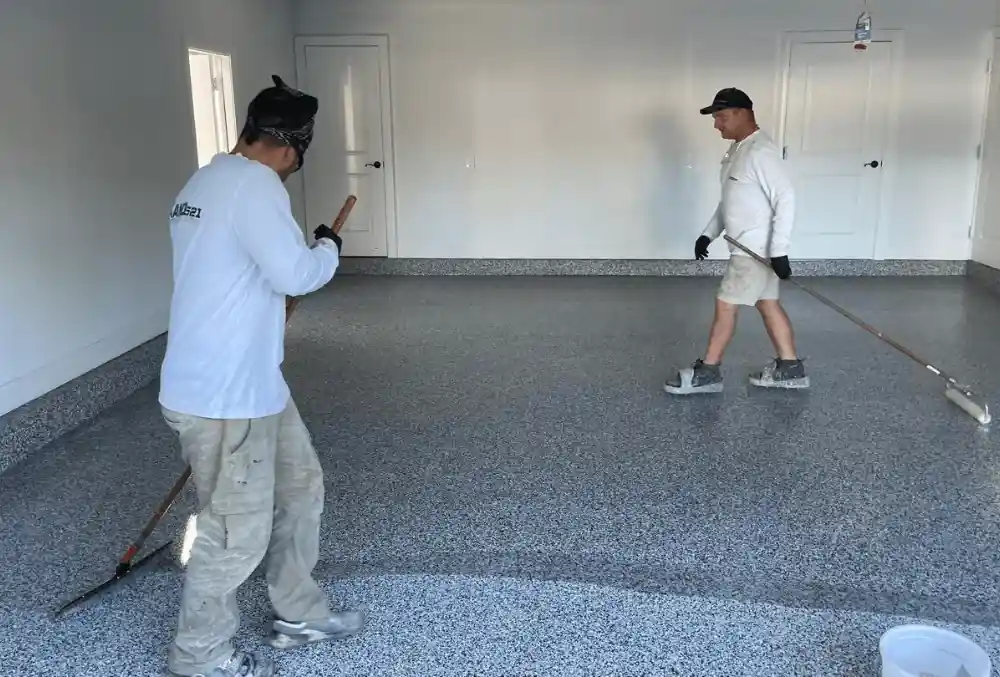
Okay, so what exactly are you paying for when you get that big shiny quote? Let’s break it down.
- Materials: The resins, hardeners, and sealants themselves usually account for about 30–40% of the total bill. If you’re buying a polyurea garage floor kit for DIY, expect to spend anywhere from $600 to $1,200 for a standard 2-car garage. That includes basics like tint packs, but you’ll likely need extra tools: a concrete grinder, 9″ roller frame, maybe even Gunite spiked shoes if you’re serious.
- Labor: Professional installation is where the cost really spikes. Expect another $2,000 to $5,000 depending on garage size and prep work. Why so high? Because polyurea is tricky—it cures fast, requires precise mixing, and demands surface perfection. One slip in moisture content or poor adhesion testing can lead to peeling, which means the whole job has to be redone.
Think of it this way: DIY installation might save money, but one installation error could double your costs later. Professionals bring industrial-grade grinders, HEPA vacs, and experience with polyaspartic aliphatic polyurea formulations. That expertise is what you’re really paying for.
Quick Snapshot:
- DIY Materials = $600–$1,200
- Professional Materials + Labor = $3,000–$7,000+
So, next time you see a local ad that says polyurea garage floor coating near me – only $1,500, be cautious. That price probably cuts corners on prep, which is the single biggest factor in whether your coating lasts.
go ahead but use my long tail keywords, LSI and semantic words also. Also use list, table or pro tip if needed to make my article informative and rich for readers.
Fact 3 – Garage Size & Layout Impact
Here’s something people sometimes overlook: the polyurea garage floor coating cost isn’t just about square footage. Sure, the math usually starts there—$4 to $12 per square foot—but the shape and condition of your existing garage floor play a big role too.
For a quick example:
- Small Garage (200 sq. ft.) → $800–$2,400
- Standard 2-Car Garage (400–500 sq. ft.) → $2,500–$6,000
- Oversized Garage (800–1,000 sq. ft.) → $5,000–$12,000+
Now, let’s say your garage has an odd L-shape, a cinder block stem wall, or tricky corners around drains. Installers often add layout fees, since detailed cutting and edge work require more time. Even the slope of your floor (for drainage) can affect the installation process because coatings need to self-level evenly.
Another subtle cost driver? If your garage doubles as a workshop or storage area with heavy shelving, installers might suggest a full flake polyaspartic coating or even an industrial-grade polyurea formulation for extra strength. Those upgrades raise costs but also extend longevity.
Pro Tip: Before asking for quotes, measure your garage yourself. Write down the square footage, note any unusual layouts, and ask contractors for a detailed Polyurea garage floor coating cost calculator breakdown. This ensures you’re not overpaying for “estimated” numbers.
Fact 4 – Surface Preparation Costs
Here’s the part nobody likes talking about—the messy, noisy prep stage. Honestly, surface preparation can make or break your coating. And yes, it adds to the bill.
Prep usually includes:
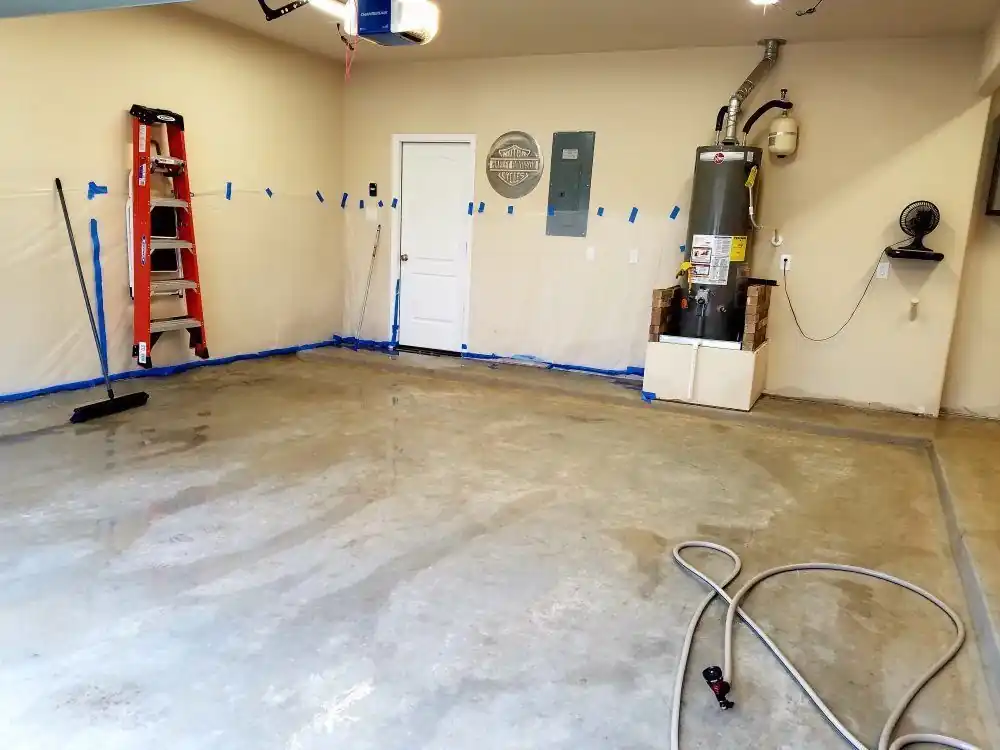
- Concrete Grinding – A floor grinder smooths out the surface for better adhesion. ($500–$1,500 depending on garage size)
- Crack Repair – Filling in chips, spalls, and hairline cracks before coating. ($200–$600)
- Moisture Barrier – Essential if your slab has high moisture content. Skipping this can cause bubbling later. ($300–$800)
- Etching or Cleaning – Some installers use eco-friendly options like GhostShield Eco-Etch 1001 instead of harsh acids.
- Adhesion Test – Ensures the coating bonds correctly to your concrete surface.
Here’s a quick look at how these prep steps can affect total cost:
| Prep Task | Typical Add-On Cost | Why It Matters |
|---|---|---|
| Grinding | $500–$1,500 | Ensures smooth, even adhesion |
| Crack Repair | $200–$600 | Stops peeling and lifting later |
| Moisture Vapor Barrier | $300–$800 | Prevents future bubbling |
| Eco-Etching | $100–$400 | Eco-friendly surface prep |
Skipping prep is tempting, especially if you’re eyeing DIY installation with a polyurea garage floor kit, but trust me—it’s risky. A poorly prepped slab is the number one cause of coating failure.
And yes, prep costs often separate the $1,500 “too good to be true” quote from the $5,000 professional job with a lifetime warranty.
Pro Tip: Ask installers if prep costs are included upfront. Some companies (like Cleveland Concrete Coatings or Shark Coatings) roll them in, while others list them as add-ons later—catching homeowners off guard.
Fact 5 – Long-Term Value vs Initial Cost
Here’s where homeowners sometimes change their mind after seeing the price tag. At first glance, the polyurea garage floor coating cost feels high compared to epoxy or even simple garage floor paint. But zoom out a few years, and the math looks different.
Epoxy coatings usually last 5–7 years before they start peeling, yellowing, or needing repair. Polyurea, on the other hand, can stretch 15–20 years with minimal touch-ups. That means fewer re-coats, fewer weekends lost to repairs, and less money spent on fixes.
Think about it like this:
| Coating Type | Average Lifespan | Maintenance Needs | Long-Term Cost (20 Years) |
|---|---|---|---|
| Epoxy Floor Coating | 5–7 years | Frequent re-coats, UV yellowing | $9,000–$12,000 |
| Polyurea Floor Coating | 15–20 years | Minimal re-coats, UV stable | $5,000–$8,000 |
Beyond the numbers, there’s the resale boost. Realtors often point out upgraded garages as a feature, especially when the garage flooring looks seamless, polished, and well-maintained. It’s not a guarantee your home sells for more, but it’s one of those small upgrades that buyers notice.
Key Long-Term Benefits:
- Durability: Handles hot tires, chemical spills, and heavy storage.
- UV Stability: No yellowing like traditional epoxy.
- Low Maintenance: Just sweep, mop, and occasionally reseal.
- Resale Value: Makes your garage look like an extension of the home.
Pro Tip: When comparing polyurea garage floor coating vs epoxy, don’t just look at upfront price. Ask yourself: Do I want to pay more now, or pay less multiple times over the years?
Fact 6 – DIY Polyurea Kits vs Professional Install
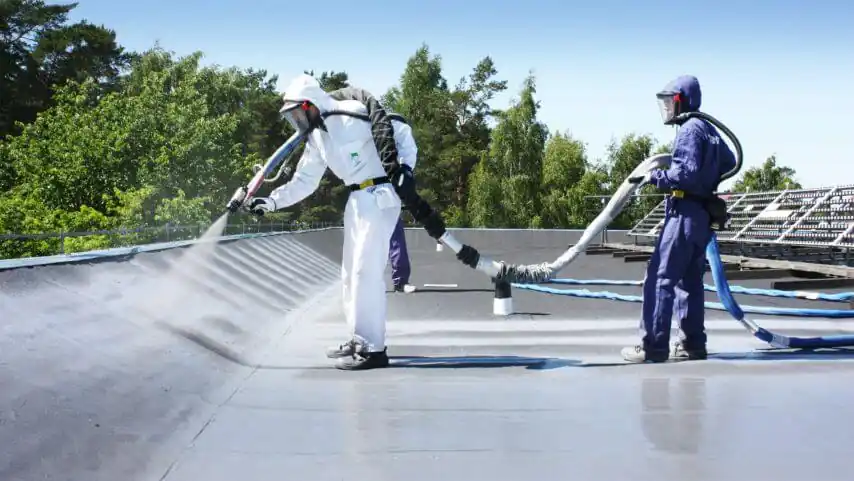
This is probably the section that sparks the most debate in homeowner forums. You Google where to buy Polyurea Garage Floor Coating Cost and suddenly you’re staring at a dozen DIY kits promising showroom results for under $1,000. Sounds tempting, right?
Here’s the breakdown:
- DIY Polyurea Garage Floor Kit
- Price: $600–$1,200 (for a standard 2-car garage)
- Includes: Resin, hardener, tint packs, maybe vinyl chips
- Extra Tools You’ll Need: Concrete grinder, mixing drill, Epoxy shoes or Gunite spiked shoes, 9″ roller frame
- Risk: Fast cure time means little room for error. If moisture content isn’t checked or prep isn’t done right, peeling happens fast.
- Professional Installation
- Price: $3,000–$7,000+ depending on garage size and prep needs
- Includes: Full surface preparation, industrial-grade polyaspartic polyurea formulations, UV-stable topcoats, anti-skid additives, warranty
- Perk: Experienced crews (think Penntek Polyurea or Southwest Exteriors) know how to deal with odd layouts, moisture vapor barriers, and curing schedules.
| Option | Upfront Cost | Risk Level | Warranty | Long-Term Value |
|---|---|---|---|---|
| DIY Kit | $600–$1,200 | High | None | Short-term savings |
| Professional Install | $3,000–$7,000+ | Low | Often lifetime | Long-term savings |
Here’s the kicker: polyurea cures so quickly (sometimes in under an hour) that even seasoned DIYers struggle with timing. A pro team, on the other hand, uses polyaspartic coatings with extended working time, giving them enough flexibility to do large areas properly.
Pro Tip: If you’re considering DIY installation, try a smaller test project first, like a basement corner or even a truck bed liner kit. It’ll give you a feel for the curing process before you commit to an entire garage.
Fact 7 – Regional & Seasonal Price Variations
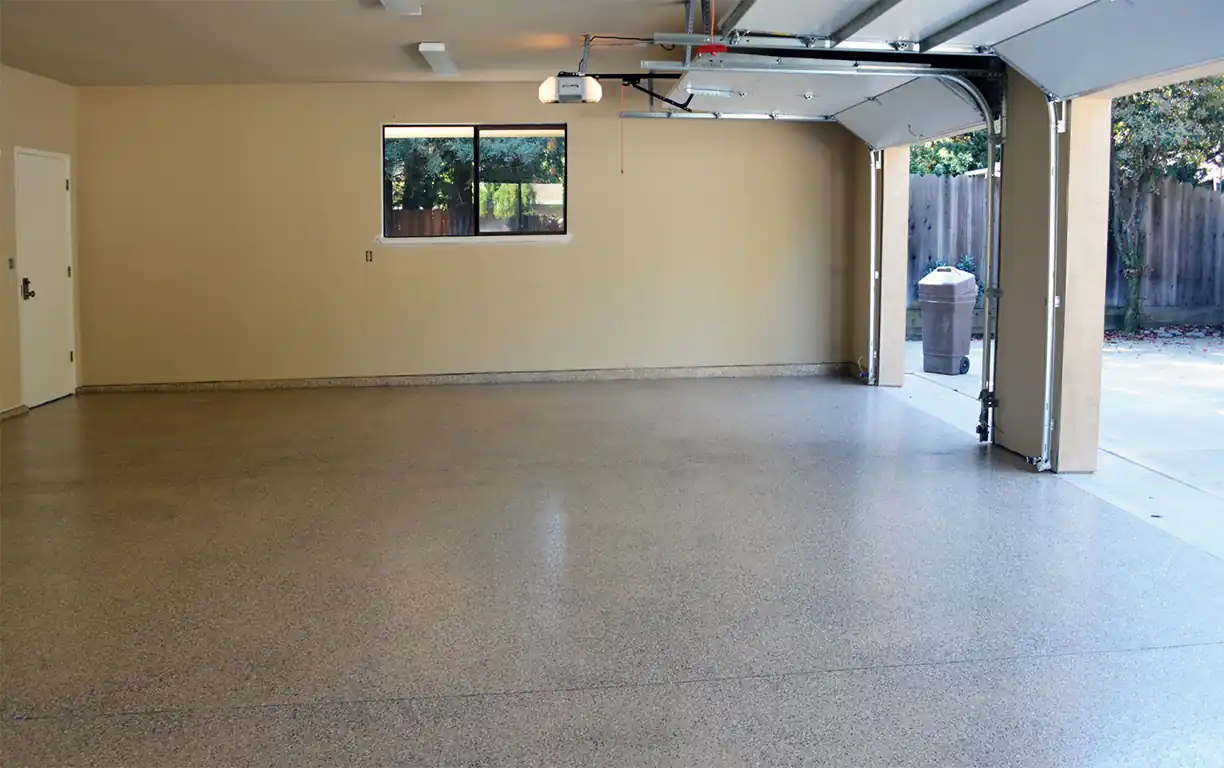
Here’s something that surprises a lot of homeowners: the polyurea garage floor coating cost near me may not be the same as what your cousin pays in another state. Why? Local labor rates, demand, and even climate play huge roles.
For example:
- High-Cost Areas (California, New York, Colorado ski towns) – Expect the top end: $10–$12 per square foot. Labor costs are higher, and demand for high-end garage floor upgrades pushes prices up.
- Midwest & South (Texas, Ohio, Georgia) – Usually $5–$8 per square foot. Companies like Cleveland Concrete Coatings and Shark Coatings compete heavily, keeping market rates reasonable.
- Low-Demand Regions (rural towns, smaller cities) – Sometimes as low as $4–$6 per square foot, but you may find fewer installers with experience in polyurea polyaspartic coatings.
And then there’s seasonal pricing. Summer tends to be busier for contractors, which means fewer discounts. Winter? Some companies offer deals just to keep crews working.
| Region | Average Cost per Sq. Ft. | Seasonal Discounts | Notes |
|---|---|---|---|
| West Coast | $8–$12 | Rare | High labor & demand |
| Midwest | $5–$8 | Occasional | Strong competition |
| South | $5–$9 | Common in winter | Moisture barrier often needed |
| Northeast | $7–$11 | Limited | Weather delays possible |
| Rural Areas | $4–$6 | Depends on installer | Fewer pros available |
Pro Tip: Search polyurea garage floor coating cost near me and request at least three local quotes. Ask about off-season pricing—sometimes you can save 10–15% just by scheduling in the slower months.
Fact 8 – Warranty & Hidden Fees
Ah, the fine print. It’s not glamorous, but it matters. Some installers lure homeowners in with a low “base price,” only to tack on extra fees later. Suddenly that $3,500 quote has ballooned into $6,000.
Common Hidden Costs to Watch Out For:
- Crack Repair Fees – Not included in the base estimate.
- Moisture Vapor Barrier Add-Ons – Essential for some concrete surfaces.
- Color & Flake Upgrades – Custom blends (like Torginol Color Flake) can add hundreds.
- Cinder Block Stem Wall Coating – Extra cost if you want walls coated too.
- Anti-Skid Additives – Safety upgrade, but often priced separately.
Now, let’s talk warranties. Professional companies often highlight lifetime warranties or 15-year guarantees against peeling and UV damage. But here’s the catch: they usually only apply if the surface preparation was done correctly and the installation process followed manufacturer guidelines.
| Company Type | Warranty | What’s Covered | Watch Out For |
|---|---|---|---|
| Pro Installers (Penntek, Southwest Exteriors, Level 10 Coatings) | 15 years to Lifetime | Adhesion, UV stability, peeling | Fine print on moisture content |
| Budget Installers | 1–5 years | Limited coverage | Extra charges for prep & additives |
| DIY Kits | None | N/A | All risk on you |
Pro Tip: Don’t just ask, “Is there a warranty?” Ask: What specifically does your warranty cover? and What voids it? For example, some warranties exclude chemical damage from things like brake fluid or battery acid.
Polyurea vs Epoxy: Cost and Performance Compared
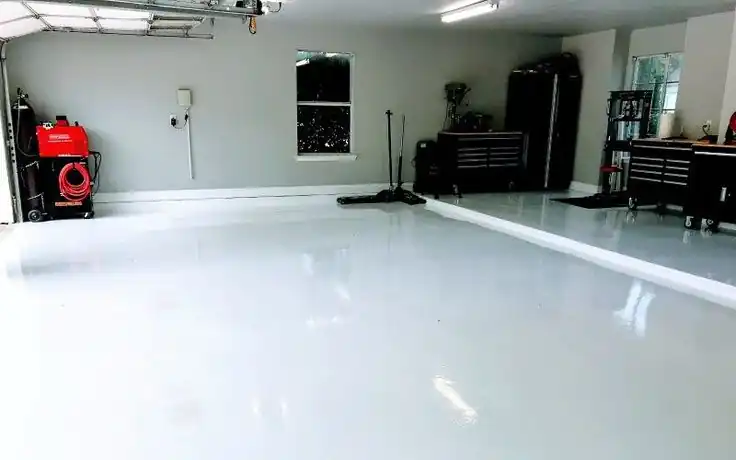
A lot of homeowners compare polyurea garage floor coating cost to epoxy because epoxy has been around longer and is often cheaper upfront. But “cheaper” doesn’t always mean better in the long run.
Key Differences in Cost & Durability:
- Epoxy Coatings: $3–$7 per square foot. Looks nice initially but prone to yellowing, cracking, and hot tire pickup. Typically lasts 3–5 years before showing wear.
- Polyurea Coatings: $5–$12 per square foot. More expensive but offers superior durability, chemical resistance, and UV protection. Can last 15+ years with proper maintenance.
- DIY Epoxy Kits: $200–$500 for a 2-car garage. Cheap but labor-intensive, and usually doesn’t hold up well.
- DIY Polyurea Kits: $700–$1,200 for the same space. Better performance than epoxy kits but still not as reliable as professional installs.
| Feature | Epoxy | Polyurea |
|---|---|---|
| Average Cost (Pro Install) | $3–$7 per sq. ft. | $5–$12 per sq. ft. |
| DIY Cost (2-Car Garage) | $200–$500 | $700–$1,200 |
| Lifespan | 3–5 years | 15+ years |
| UV Resistance | Poor | Excellent |
| Flexibility | Brittle | Highly flexible (less cracking) |
| Maintenance | Re-coat often | Minimal upkeep |
Pro Tip: If you’re planning to stay in your home long-term, polyurea flooring is a better investment. The higher upfront cost pays off when you don’t have to redo your garage floor every few years.
How to Budget Smart for Polyurea Flooring
So, how do you prepare your wallet for the polyurea garage floor coating cost without breaking the bank? The trick is planning ahead and knowing where you can save—and where you shouldn’t cut corners.
Steps to Budget Effectively:
- Measure Your Garage Size Accurately – Don’t guess. A 2-car garage is usually 400–500 sq. ft., but yours may differ.
- Set Aside for Surface Prep – Expect $300–$800 for repairs like crack filling or moisture barrier.
- Decide on Design Add-Ons – Flake blends, custom colors, and logos can increase costs by $500–$1,500.
- Ask About Financing – Many companies (like Southwest Exteriors or Shark Coatings) offer 0% financing for 12–24 months.
- Compare DIY vs Pro Install – DIY saves money upfront but comes with more risks. Pros give you warranties and peace of mind.
| Budget Item | Estimated Cost | Notes |
|---|---|---|
| Base Polyurea Coating | $5–$12 per sq. ft. | Depends on region & installer |
| Surface Prep | $300–$800 | Crack & moisture repair |
| Decorative Flakes & Additives | $200–$1,500 | Optional upgrades |
| Professional Labor | $1,500–$3,500 | Included in most quotes |
| DIY Kit (2-Car Garage) | $700–$1,200 | Risk of peeling & poor adhesion |
Pro Tip: Always request a detailed, itemized quote. This prevents surprise add-ons later and lets you compare apples to apples when looking at different installers.
Final Thoughts
When weighing the polyurea garage floor coating cost, it’s not just about the upfront price—it’s about long-term value. Yes, polyurea often costs more than epoxy or basic paint kits.
But you’re investing in durability, UV resistance, and a floor that lasts 15+ years with minimal upkeep. That’s why many homeowners see polyurea as a smart, future-proof choice.
If you’re on the fence, get a few local quotes, ask about seasonal discounts, and check what’s included in the warranty. And remember—cheap isn’t always the best.
A properly installed polyurea floor can boost home value, reduce maintenance costs, and give your garage a sleek, showroom-quality look.
People Might Ask (FAQs)
1. What is the average polyurea garage floor coating cost?
On average, homeowners pay between $5–$12 per square foot, depending on region, installer, and customization.
2. Is polyurea worth the extra cost compared to epoxy?
Yes. Polyurea lasts up to 15 years or more, while epoxy usually needs replacement in 3–5 years. The upfront cost pays off long-term.
3. Can I DIY a polyurea garage floor?
Yes, but results vary. DIY kits cost $700–$1,200 for a 2-car garage, while pro installs offer better prep, adhesion, and warranties.
4. What factors increase the price of polyurea coatings?
Extras like moisture barriers, crack repair, custom flake colors, and anti-slip additives can add $300–$1,500 to the final cost.
5. How do I find the best deal on polyurea garage floor coating?
Get 3+ local quotes, ask about off-season discounts, and request itemized pricing so you’re not surprised by hidden fees.
6. How much does polyurea garage floor coating cost?
The polyurea garage floor coating cost usually ranges from $5–$12 per square foot. A typical 2-car garage (400–500 sq. ft.) may cost $2,500–$6,000, depending on location, prep work, and customization.
7. What are the disadvantages of polyurea coating?
While durable, polyurea coatings have some drawbacks. They are more expensive than epoxy, harder for DIY application, and installation often requires professional equipment. Some homeowners also find limited local installers in rural areas.
8. Is polyurea garage floor worth it?
Yes—if you want a long-lasting, low-maintenance solution. Polyurea floors resist cracks, chemicals, and UV fading, lasting 15+ years. The higher upfront price is offset by not needing frequent re-coats like with epoxy.
9. How much does it cost to epoxy a 20×20 garage floor?
Epoxy is cheaper than polyurea. A 20×20 garage (400 sq. ft.) usually costs $1,200–$3,000 for professional epoxy installation, while polyurea may run $2,500–$4,800 for the same space.
10. Can polyurea be applied in cold or hot weather?
Yes. Polyurea has a fast cure time and can be applied in extreme temperatures (from -20°F to 140°F), making it more versatile than epoxy. This is especially useful in regions with seasonal weather changes.